What People Think I Do vs. What I Actually Do (As a Podcast Producer)
When I tell people I'm a podcast producer, I can watch the sentence land (or not) in real time. There's a nod, a little pause, and then nine times out of ten some version of:
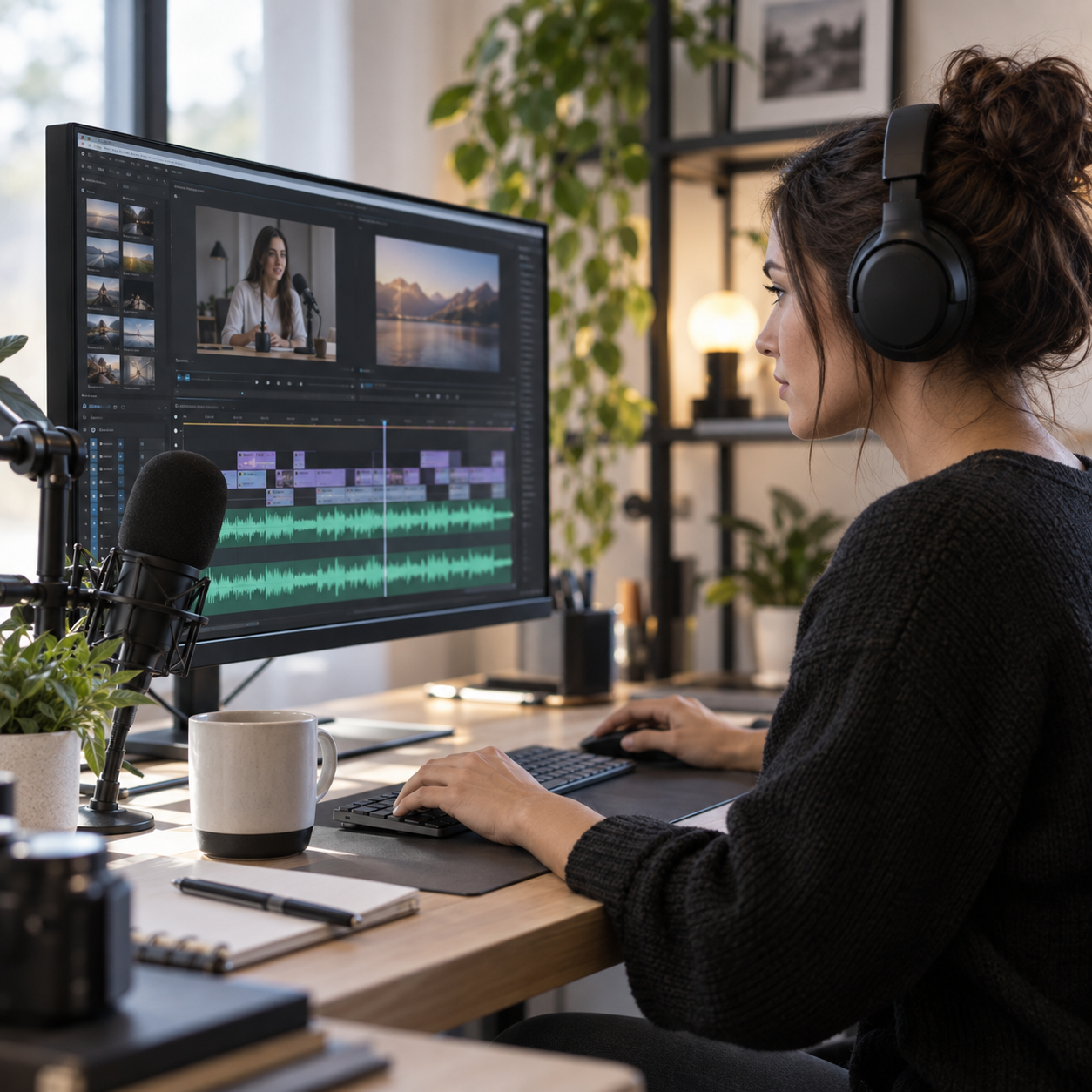
"Oh cool, so you like... upload the episodes?"
Sure. Sometimes. On a Tuesday. Right after the other forty things. I get it. "Producer" is a word that's been stretched across so many industries it barely means anything anymore.
Movie producer, music producer, the person in the headset yelling "we're rolling." So instead of explaining it one more time I figured I'd just write it down.
Here's the honest gap between what people picture and what actually happens on my end of a podcast.
What people think: I upload a recording somewhere.
What I actually do: I run the whole operation around the recording.
The upload is maybe 2% of the job, and it's the part I could teach almost anyone to do. The other 98% is everything that has to happen so the upload is even worth doing.
Think of it like a dinner party. Anyone can carry a plate to the table. That's the upload. But somebody planned the menu, shopped for it, prepped it, timed it so nothing came out cold, and made the whole thing feel easy for the people sitting down to eat.
That's the job. So let's go through it piece by piece.
What people think: ‘‘ You just hit record and talk, right? ’’
What I actually do: I build the entire runway before anyone talks.
That means guest research and outreach not just who would be interesting, but who's actually aligned with where this show is going and who it serves. It means the back-and-forth of scheduling across time zones. It means sending prep docs so guests show up knowing what we're doing and don't spend the first ten minutes warming up. It means gently talking someone through their mic settings over text at 8:47 in the morning because their audio sounds like it's coming from inside a coffee can.
It also means outlining. A great conversation feels spontaneous, but the ones that land almost never are. Someone thought about the arc ahead of time — the opening question, the turn in the middle, the thing you want the listener walking away with.
By the time my clients sit down to record, my whole goal is that they have exactly one job: have the conversation. Everything else is already handled.
What people think: "Editing is just cutting out the ums, isn't it?"
What I actually do: I shape a raw, meandering, beautifully human conversation into something with a beginning, a middle, and a reason to keep listening.
Yes, the ums go. But that's the smallest part of it. Real editing is deciding that the strongest moment happened at minute thirty-eight and needs to be teased at the top. It's cutting the eight-minute tangent that was fun to have and painful to listen to. It's fixing the room echo, evening out the guest who leaned away from their mic the whole time, and making two people recorded on two audio channels (and sometimes setups in two different states) sound like they're in the same room.
Nobody ever notices good editing. That's the whole point. They just notice that they didn't turn it off.
What people think: "The show notes kind of write themselves, don't they?"
What I actually do: I turn an hour of talking into something findable.
A title that doesn't get scrolled past. A description that actually tells someone what's inside instead of teasing them into confusion. Timestamps. Links to every single thing anybody mentioned. Show notes written so search engines and real humans can both figure out what this episode is.
Because here's the hard truth: a great episode nobody discovers didn't really happen. Discoverability isn't the glamorous part of podcasting, but it's the difference between a show that grows and a show that just... exists.

What people think: ‘‘ Podcasts just kind of live on their own after you post them. ‘‘
What I actually do: I manage the entire afterlife of every episode.
One recording session should not produce one file. It should produce clips, captions, quote graphics, a newsletter blurb, social posts spread across the weeks ahead. It should feed the content calendar instead of draining it.
This is the part that surprises people most. The recording is the raw material. The repurposing is what makes podcasting sustainable for a busy person who cannot possibly create new content from scratch every single week. When it's done right, one good hour in the mic covers you for a long time.
What people think: " So it's kind of a hobby you help with? "
What I actually do: I hold the strategy.
Why does this show exist? Who is it actually for? What does growth mean for this specific person? Is it visibility, is it connection, is it selling something, or is it just having a sustainable content engine that doesn't wreck their week?
Those answers change everything downstream. They change which guests we book, how episodes get structured, what we do with the clips, and how we measure whether any of it is working. Without that thread running through it, you're just making audio and hoping.
And it's worth saying that the audience is genuinely there. Edison Research's Infinite Dial 2026 found that 58% of Americans aged 12 and up, roughly 167 million people, listened to a podcast in the last month. The listeners exist. The question is whether your show is built to reach any of them.
Somebody has to be holding the whole vision while the host is busy being the host. That's me.
The part nobody sees
There's also the unglamorous middle. The file that didn't upload. The guest who ghosted. The recording where one track didn't save. The platform that changed its rules overnight. Producing is a lot of quiet problem solving that never makes it into the finished episode, and honestly, that's the measure of whether it went well.
Here's a number that says more about this job than anything else I could tell you. There are somewhere around 4.7 million podcast feeds registered worldwide, but only about 480,000 of them have published anything in the last 90 days. That's roughly one in ten.
The gap between those two numbers isn't a talent gap. It's almost entirely people who had something worth saying and couldn't sustain the process around it.
So if you're listening to a show and it feels effortless, that's not an accident. That's somebody upstream doing a lot of work you'll never hear.
So, what do I actually do?
I make sure there's a good recording to upload. I make sure it doesn't disappear the second it's published. And I make sure the person behind the mic gets to show up, be present, and just talk instead of drowning in the forty small tasks surrounding a single episode.
It's a lot less "press record" and a lot more "hold the whole thing together so it looks easy."
If you've ever wondered what it would feel like to have someone doing all of that for your show that's genuinely my favorite conversation to have. Come say hi on socials or book a call with me and let’s get you “On Air.”
— Erin Beavers
The Intuitive Beavers Agency, Podcast Producer